Birds of East Africa

Kenya

Kenya's recorded bird list runs past 1,100 species — Rift Valley soda lakes thick with flamingos, western rainforest fragments like Kakamega holding Central African specialties, and savannah raptors and rollers everywhere in between. These twelve are the ones travelers ask about most, and the ones our own itineraries are built around.

Best time for birding

Seasonality

Kenya is a year-round birding destination. Palearctic migrants are present roughly October to April, adding shorebirds, warblers, and raptors to the resident list. The long rains (around March to May) and short rains (around October to December) bring breeding activity and lush habitat, but can slow travel on some park roads. We plan each route around the season you travel, and are honest about the trade-offs of each window.

Most popular birds

Twelve birds to know before you go

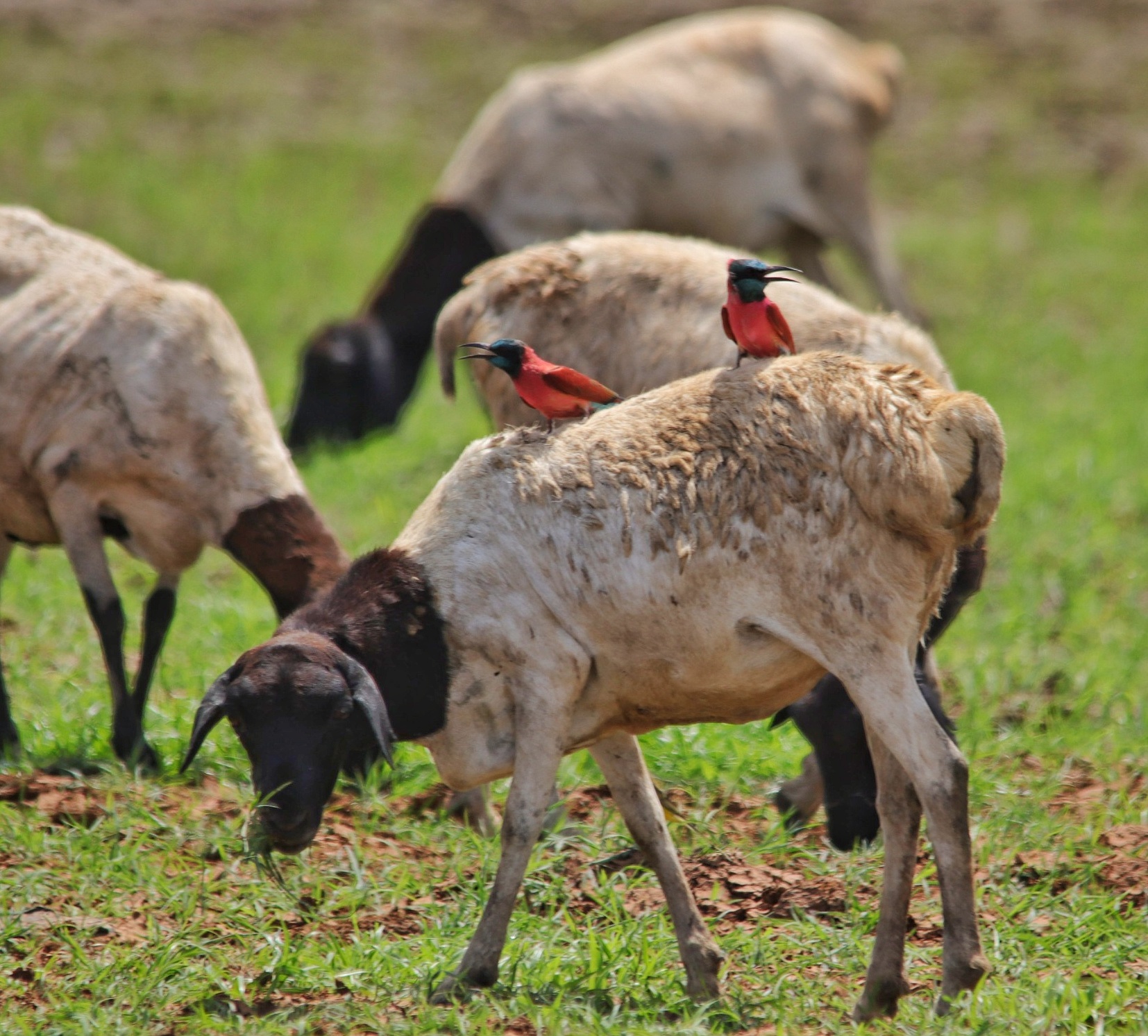
Two Northern Carmine Bee-eaters perched on the backs of grazing sheep, Kenya

Northern Carmine Bee-eater

Merops nubicus

Unmistakable in flight: a rosy-carmine body, iridescent blue-green head, black eye-line and throat, and long central tail streamers. One of its most reliable field behaviors is riding on the backs of grazing livestock — or even bustards — to snap up insects flushed by their movement, exactly as photographed here on a Kenyan sheep flock.

View live sightings on eBird →
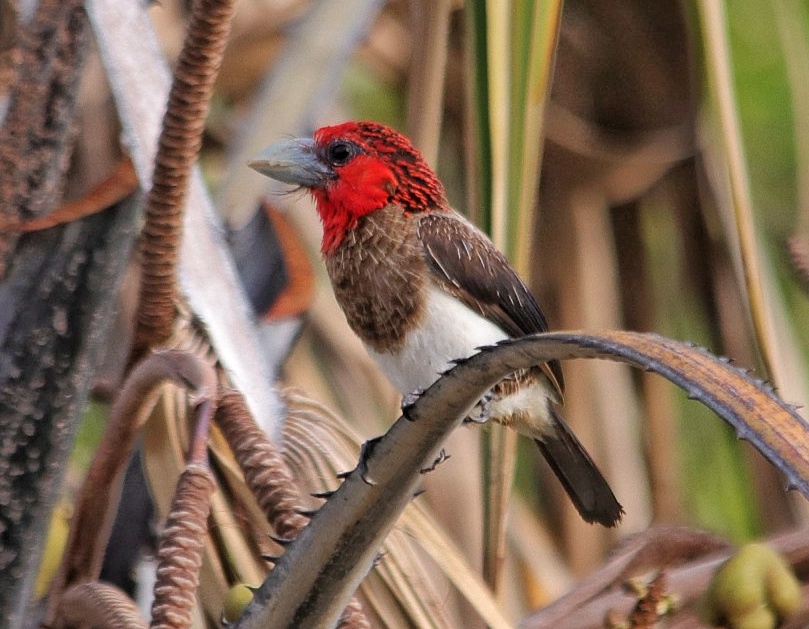
Brown-breasted Barbet perched on a thorny branch, Kenya

Brown-breasted Barbet

Lybius melanopterus

A plump, large-headed barbet with a bristle-fringed bill: red forehead, face and neck, a brown breast band, and a white belly. Mostly solitary, it eats fruit — figs especially — alongside a wide range of insects, and nests in tree cavities. Found in coastal and lowland woodland across Kenya, Tanzania, Somalia, Malawi, and Mozambique.

View live sightings on eBird →
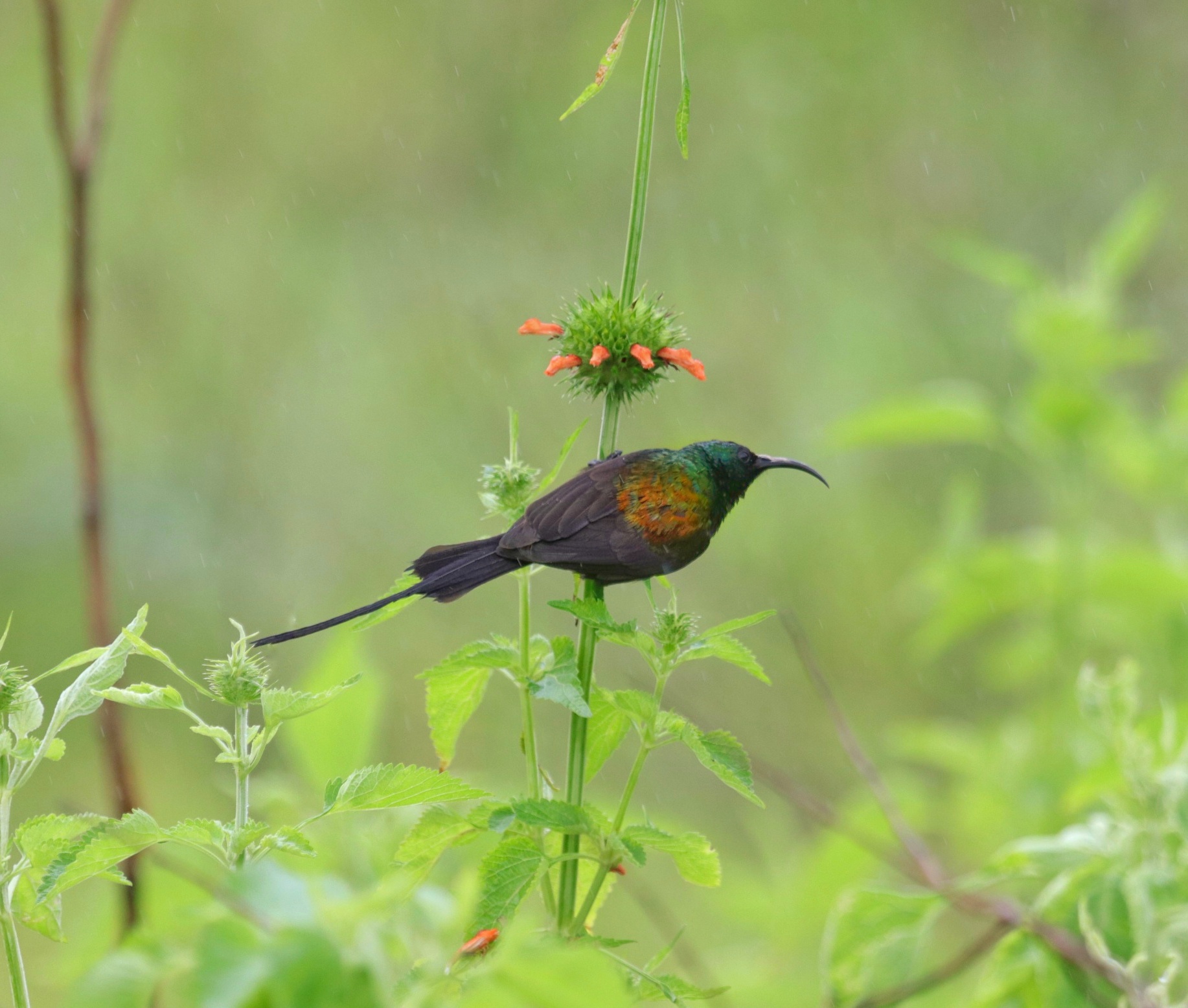
Bronze Sunbird feeding at a flowering plant, Kenya

Bronze Sunbird

Nectarinia kilimensis

Males show a bronze-and-green iridescence that reads as almost black in flat light but flares metallic in the sun, with a long, fine, downcurved bill and elongated central tail feathers. Females are duller, with a pale eyebrow and finely streaked yellowish underparts. A nectar feeder, drawn to flowering shrubs at forest edges and highland habitats.

View live sightings on eBird →
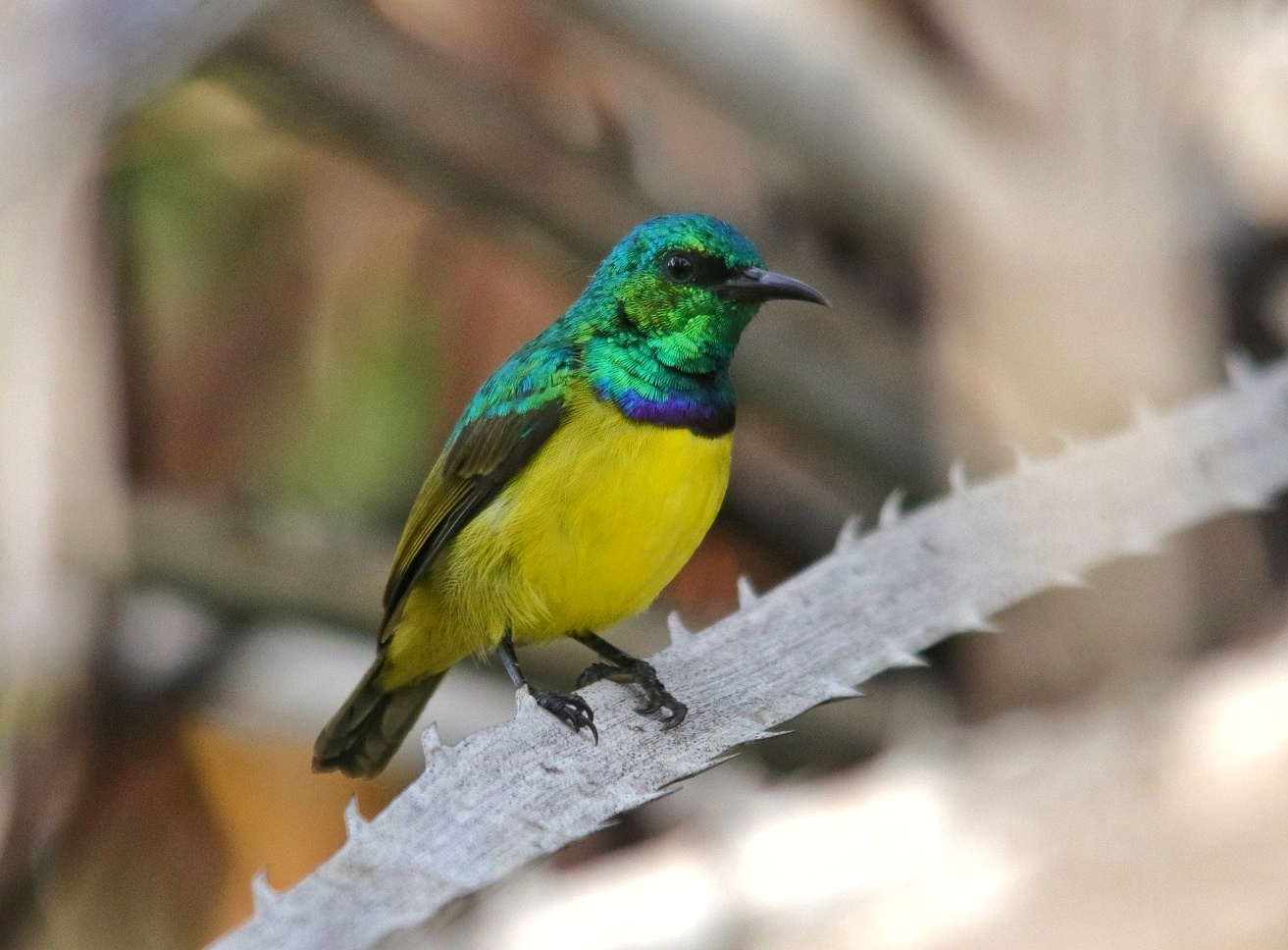
Collared Sunbird perched among foliage, Kenya

Collared Sunbird

Hedydipna collaris

A tiny, short-billed sunbird: males have a metallic-green back and throat, a narrow purplish breast band, and a yellow belly; females are duller, with a yellow throat and no breast band. Both sexes carry the short, down-curved bill and brush-tipped tongue typical of nectar feeders, and favor forest and woodland edges.

View live sightings on eBird →
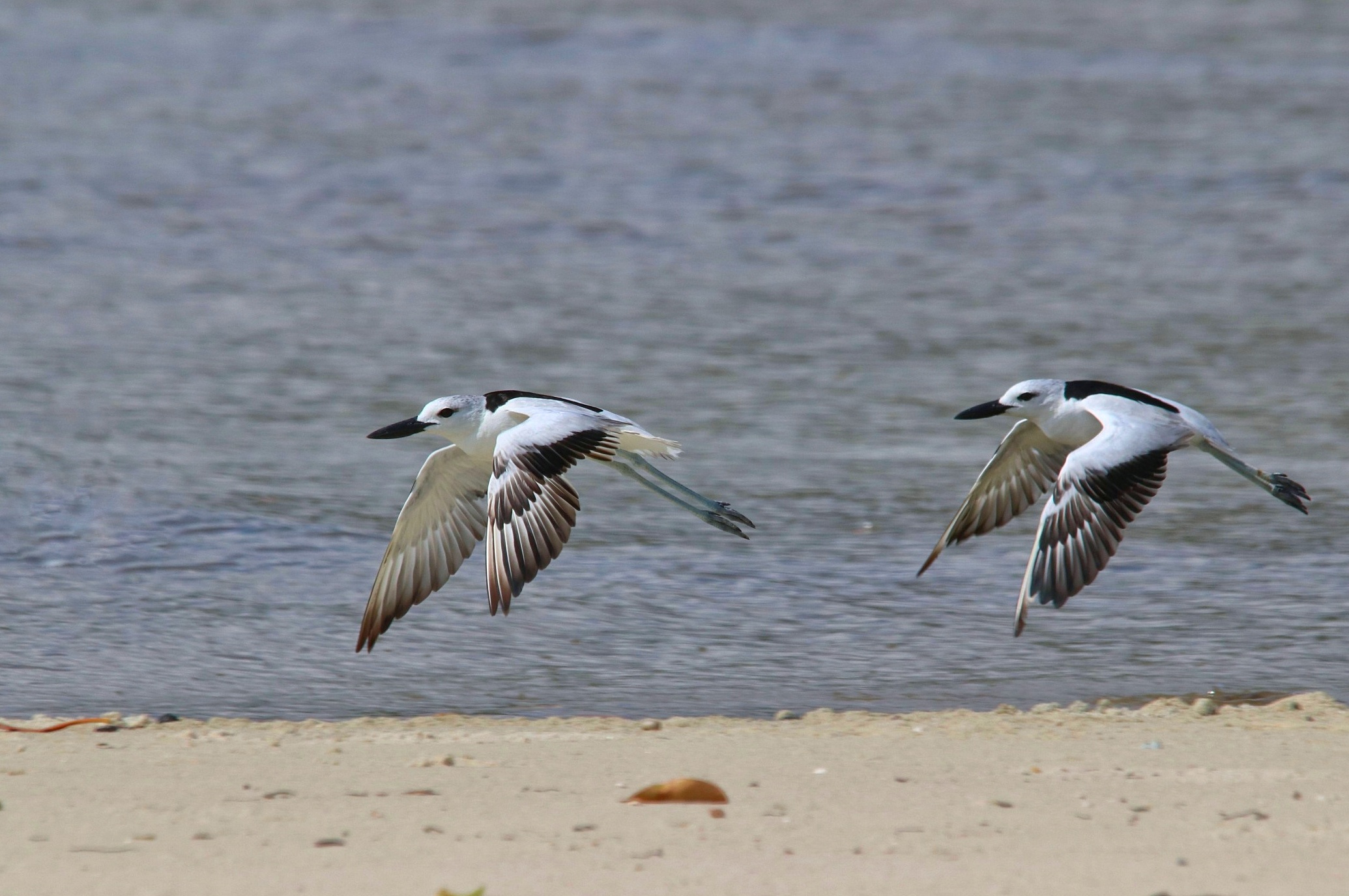
Two Crab Plovers in flight over a Kenyan beach

Crab Plover

Dromas ardeola

Distinctive enough to sit in its own family: white body, black back and primaries, a heavy black tern-like bill, and long grey legs, with a dark smudge around the eye giving it a sleepy look. Feeds on crabs, often in gregarious flocks, and is more crepuscular and nocturnal during the breeding season. Breeds around the Arabian Sea, Gulf, and Red Sea, then disperses south to overwinter along the Kenya coast.

View live sightings on eBird →
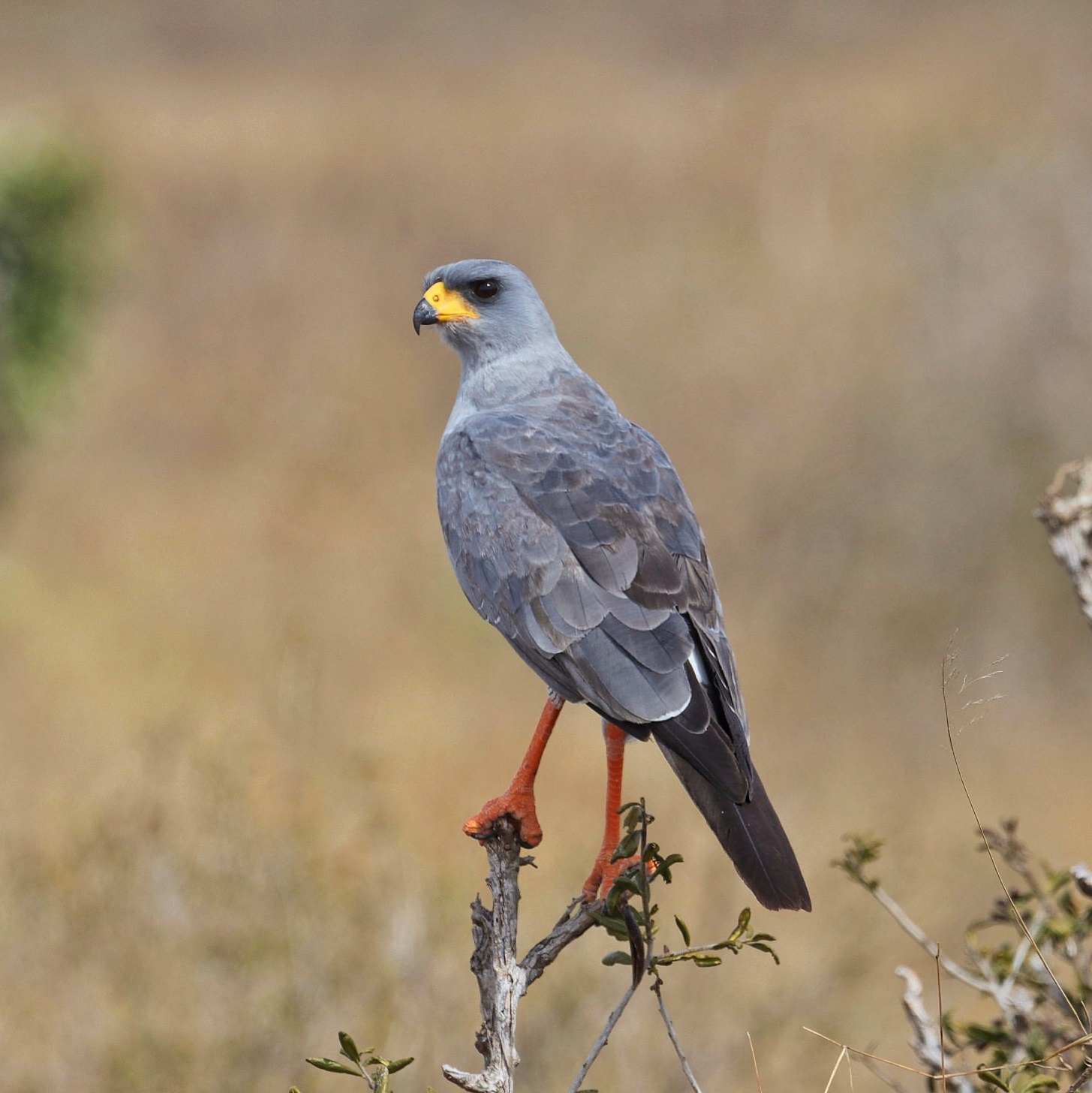
Eastern Chanting Goshawk perched on a dead branch, Kenya

Eastern Chanting Goshawk

Melierax poliopterus

Grey overall with black wingtips and uppertail, yellow facial skin, and long red-orange legs; in flight shows a clean white, unbarred rump. This is the chanting goshawk you'll actually see in Kenya — the similar Pale Chanting Goshawk is a southern African species and doesn't occur here. Found in semidesert, dry bush, and wooded grassland across eastern Kenya and neighboring areas.

View live sightings on eBird →
Lilac-breasted Roller perched, Maasai Mara

Lilac-breasted Roller

Coracias caudatus

A savannah favorite: lilac throat and breast, an olive-to-green crown, rufous cheeks, and — in adults only — long black tail streamers. In flight it flashes cyan, indigo, and royal blue across the wings and back. Perches conspicuously on exposed branches and fence posts while hunting insects, which is usually how it's first spotted.

Photo: Wikimedia Commons

View live sightings on eBird →
Grey Crowned Crane

Grey Crowned Crane

Balearica regulorum

Blue-grey overall, with a black-and-white face, large white cheek patches, a red inflatable throat wattle, and a crown of stiff golden plumes — genuinely unmistakable. Found in marshes, cultivated land, and grassy flats near rivers and lakes, standing around a meter tall with a two-meter wingspan.

Photo: Wikimedia Commons

View live sightings on eBird →
Secretarybird, Maasai Mara

Secretarybird

Sagittarius serpentarius

Up to 1.3 meters tall on long, bare, pinkish legs — impossible to confuse with any other raptor. Mostly grey with black flight feathers and thighs, a flattened dark crest, and a bare red-orange face. Unusually for a raptor, it hunts entirely on foot, stomping prey (including snakes) to kill it, and can cover 20–30 km a day.

Photo: Wikimedia Commons

View live sightings on eBird →
Superb Starling

Superb Starling

Lamprotornis superbus

Small and iridescent: a bronzy-black crown and ear coverts, glossy blue-green chest and back, a narrow white breast band, and a red-orange belly and flanks. Adults have distinctive pale, creamy-white eyes — the clearest way to separate them from the similar Hildebrandt's Starling.

Photo: Wikimedia Commons

View live sightings on eBird →
Lesser Flamingos, Lake Nakuru National Park

Lesser Flamingo

Phoeniconaias minor

The smallest flamingo species, deep pink with a long curved neck, a down-curved bill, and thin pink legs. Feeds on the cyanobacteria that thrive in Kenya's alkaline Rift Valley soda lakes — Lake Nakuru and Lake Bogoria are among the most important sites on Earth for the species, with numbers that can run past a million birds.

Photo: Wikimedia Commons

View live sightings on eBird →
Malachite Kingfisher, Lake Victoria, Kenya

Malachite Kingfisher

Corythornis cristatus

A small kingfisher — about 13 cm — with bright metallic-blue upperparts, a short blue-and-black crest, rufous cheeks and underparts, and a white throat patch. Adults have a reddish-orange bill and red legs. Favors reeds and low perches over still or slow-moving water at lakes and rivers.

Photo: William Warby / Wikimedia Commons

View live sightings on eBird →

Data: eBird / Cornell Lab of Ornithology. Field marks and range notes checked against eBird species accounts, Birds of the World, and BirdLife DataZone before publishing.

Birding is part of every Hudhud safari

Ask us about birding-focused itineraries, or see our current Kenya packages.

Ask us about birding trips Browse itineraries